Tell us about the job
Takes about a minute. No obligation.
A heat pump in trouble here is probably not in trouble because of the weather. 100 severe weather events were recorded in Cabarrus County, North Carolina between 2015 and 2024. That puts this county in roughly the middle of the national spread, which means severe weather is a real but not dominant factor in how systems wear. A contractor working a repair will look hard at the age of the refrigerant lines, the condition of the capacitor, and how consistently the system has been serviced, because those are the variables that account for most failures in a county where the weather load is moderate rather than punishing.
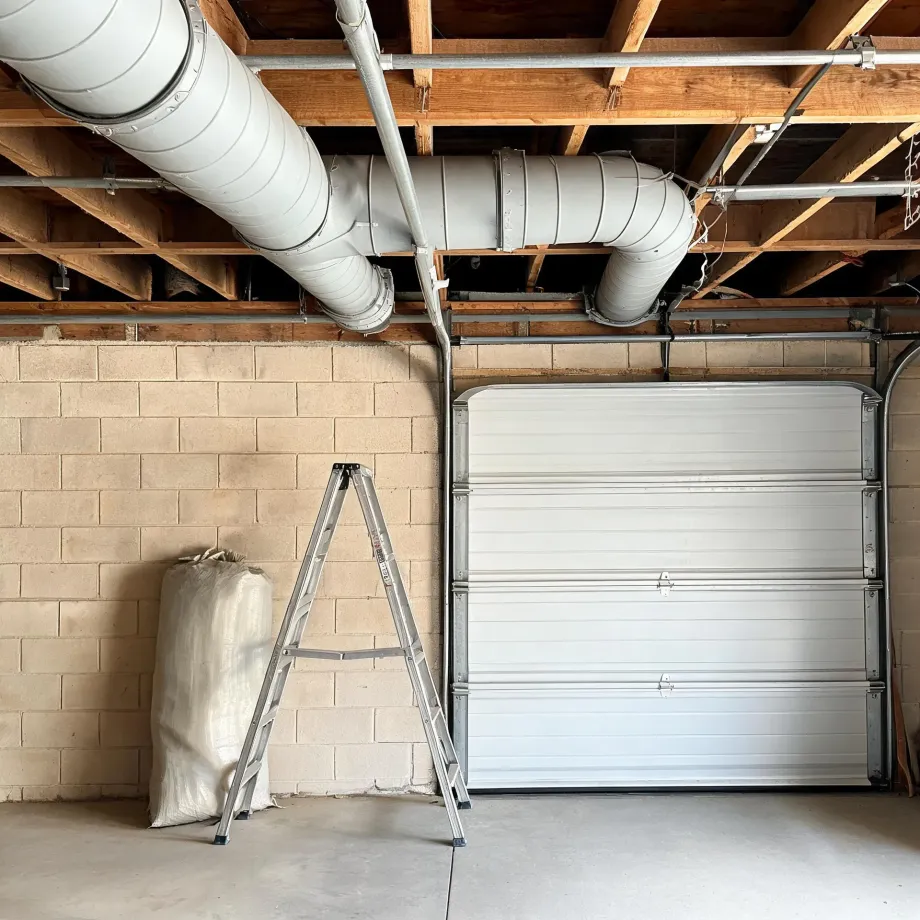
Heat pumps in housing stock this age carry a specific repair profile. Refrigerant circuits develop slow leaks at fittings that have expanded and contracted through years of North Carolina summers and winters. Electrical connections corrode and loosen. Half the homes in Cabarrus County, North Carolina were built in 1997 or earlier (2020-2024 ACS 5-year). A contractor opening a system in this county expects to find wear in the components themselves, and the relevant question is whether the failed part is still in supply, not whether the house around it was built for this equipment.
The Parts of a Heat Pump a Contractor Checks First
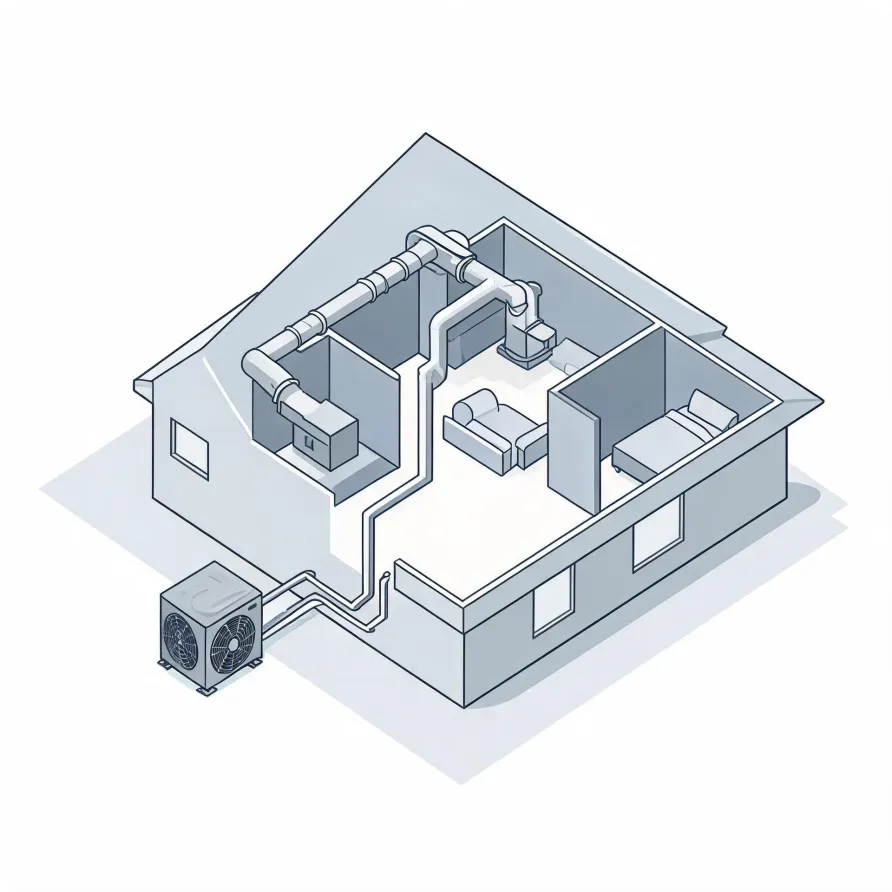
The outdoor unit sits on a pad outside the house and holds the compressor and condenser coil. The compressor is usually where a contractor starts: when it fails, the system runs but moves no heat. The condenser coil and its fan pull outside air across the refrigerant, and a bent or dirty coil will show up as poor performance throughout the whole system.
The air handler lives inside, most often in a utility closet, attic, or basement, and contains the blower motor and the evaporator coil. The blower moves conditioned air into the house, and a failing motor often announces itself through weak airflow or noise. The expansion valve and refrigerant lines connect the two units, and a leak or a stuck valve will push symptoms to both ends of the system.
The drawing shows a general layout of a heat pump system, and a licensed contractor determines which components apply and what condition they are in for your specific home.
Find a contractor in Cabarrus CountyCabarrus County by the numbers
100 severe weather events were recorded in Cabarrus County, North Carolina between 2015 and 2024.
NOAA National Centers for Environmental Information, Storm Events Database, bulk CSV export, events 2015-01-01 through 2024-12-31.Half the homes in Cabarrus County, North Carolina were built in 1997 or earlier (2020-2024 ACS 5-year).
U.S. Census Bureau, 2020-2024 American Community Survey 5-Year EstimatesCabarrus County, North Carolina holds 93,691 housing units (2020-2024 ACS 5-year).
U.S. Census Bureau, 2020-2024 American Community Survey 5-Year EstimatesOwners occupy 71.2% of the occupied homes in Cabarrus County, North Carolina (2020-2024 ACS 5-year).
U.S. Census Bureau, 2020-2024 American Community Survey 5-Year EstimatesCodes & Standards Governing Heat Pump Repair in Cabarrus County, North Carolina2 sourced rules & standards
Licensing Rules for HVAC Repair in Cabarrus County, North Carolina
North Carolina issues Class I heating licenses covering all systems in all structures, and Class II licenses covering heating systems in single-family detached residential dwellings.
North Carolina requires a license before any person or firm may engage in, or offer to engage in, the business of heating contracting.
Severe Weather Events in Cabarrus County
Extreme weather puts heat pumps under sustained stress, and how hard the equipment works over time is a direct driver of repair frequency. That load is local, shaped by what this county's climate actually delivers.
100 severe weather events, 2015–2024. Source: NOAA National Centers for Environmental Information, Storm Events Database.