Tell us about the job
Takes about a minute. No obligation.
A heat pump that stops working in Haywood County has almost certainly not been worn down by severe weather. 42 severe weather events were recorded in Haywood County, North Carolina between 2015 and 2024. At that rate, storms are an occasional fact of life here, not a standing condition that grinds through refrigerant lines or compressor windings over years. A contractor quoting a repair will find age, original installation quality, and maintenance history doing most of the explaining. Weather can be set aside early in the diagnosis.
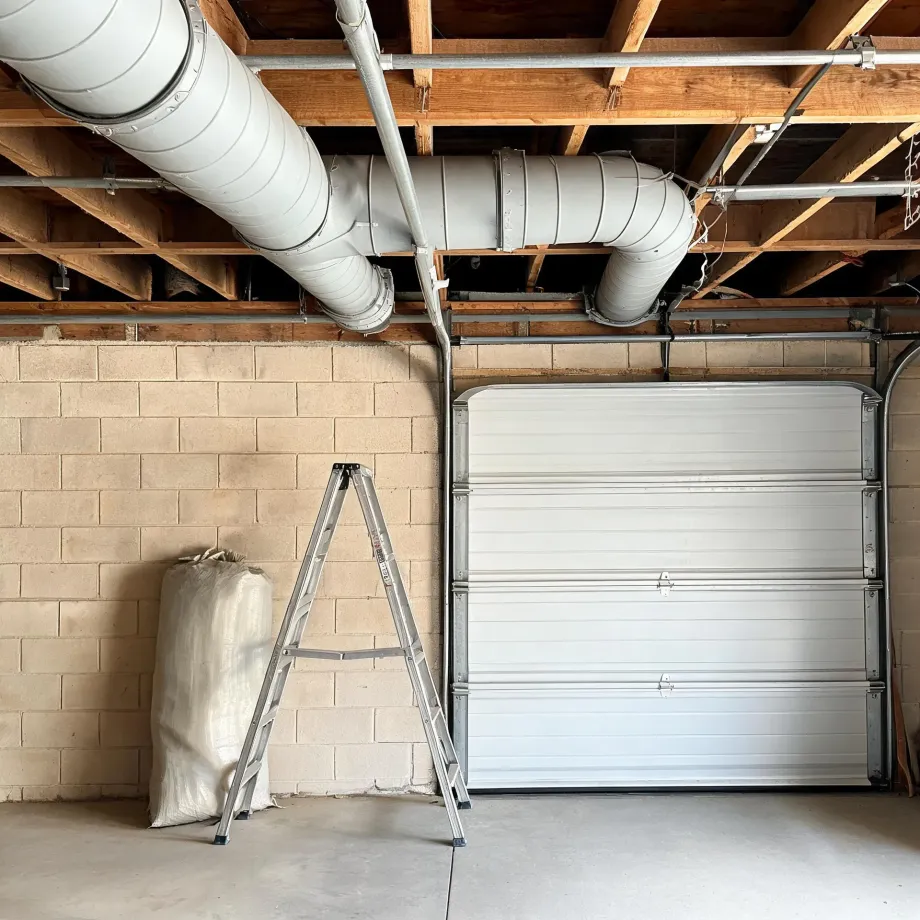
Ductwork in a house this old has a history a contractor has to read before the repair on the unit itself means anything. Half the homes in Haywood County, North Carolina were built in 1983 or earlier (2020-2024 ACS 5-year). A heat pump can be pulling the right refrigerant charge and still underperform because a duct run has been sealed over, sagged, or rerouted around a later renovation. When a contractor opens the system, the refrigerant circuit and the electrical connections are straightforward to evaluate. What takes longer is tracing where the air actually goes and where it stops.
The Parts of a Heat Pump a Contractor Checks First
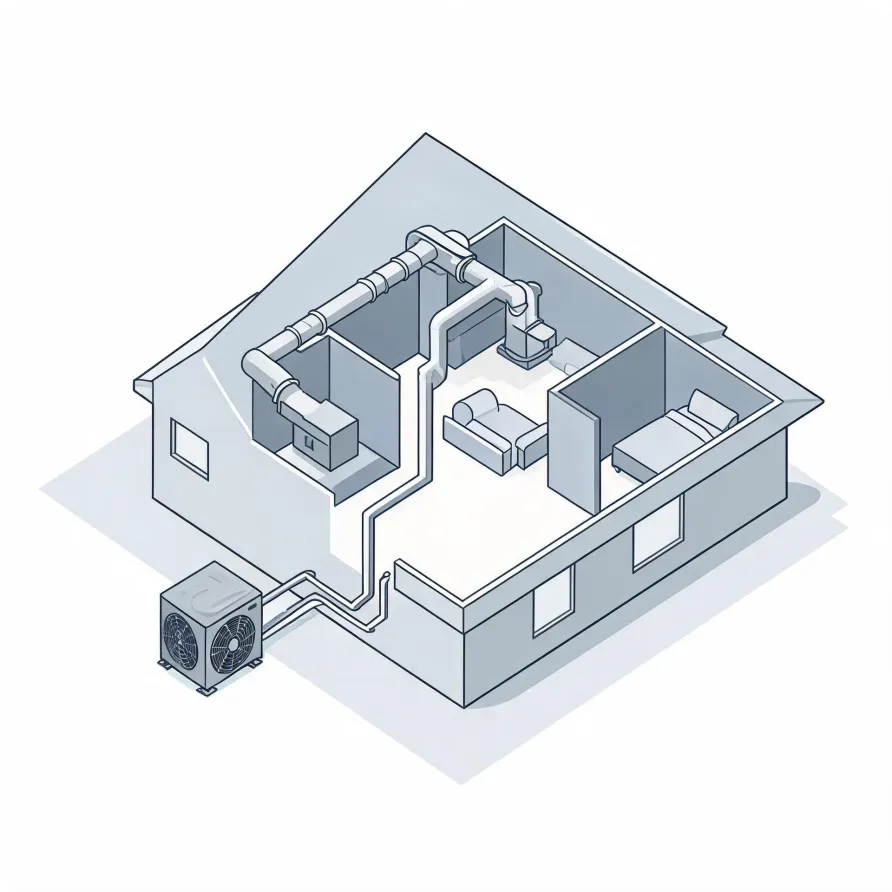
The outdoor unit sits on a pad beside the house and holds the compressor and the condenser coil. The compressor is the first place a contractor looks when a heat pump stops heating or cooling, because it is the heart of the refrigerant circuit. The condenser coil wraps around it, and a bent or dirty coil will drive the whole system toward failure.
Inside the house, the air handler holds the blower motor and the evaporator coil, usually in a closet, attic, or utility room. The blower motor pushes conditioned air through the house, and the reversing valve, which sits in the outdoor unit, is what lets the system run in both directions. Refrigerant lines connect the two units, and a leak anywhere along them will show up as poor performance at both ends.
The drawing shows the general layout of a heat pump system, and a licensed contractor determines what applies to your specific house and equipment.
Find a contractor in Haywood CountyHaywood County, by the numbers
42 severe weather events were recorded in Haywood County, North Carolina between 2015 and 2024.
NOAA National Centers for Environmental Information, Storm Events Database, bulk CSV export, events 2015-01-01 through 2024-12-31.Half the homes in Haywood County, North Carolina were built in 1983 or earlier (2020-2024 ACS 5-year).
U.S. Census Bureau, 2020-2024 American Community Survey 5-Year EstimatesHaywood County, North Carolina holds 35,560 housing units (2020-2024 ACS 5-year).
U.S. Census Bureau, 2020-2024 American Community Survey 5-Year EstimatesOwners occupy 74.9% of the occupied homes in Haywood County, North Carolina (2020-2024 ACS 5-year).
U.S. Census Bureau, 2020-2024 American Community Survey 5-Year EstimatesRules & Standards for Heat Pump Repair in Haywood County, North Carolina2 sourced rules and standards
Licensing Rules for HVAC Repair in Haywood County, North Carolina
North Carolina issues Class I heating licenses covering all systems in all structures, and Class II licenses covering heating systems in single-family detached residential dwellings.
North Carolina requires a license before any person or firm may engage in, or offer to engage in, the business of heating contracting.
Weather Stress on HVAC Equipment in Haywood County
Heat pumps work against whatever the outdoor air gives them, and harder conditions mean more wear on compressors, coils, and controls. How often severe weather hits Haywood County shapes how hard that equipment is pushed and how often repair needs arise.
42 severe weather events, 2015–2024. Source: NOAA National Centers for Environmental Information, Storm Events Database.