Tell us about the job
Takes about a minute. No obligation.
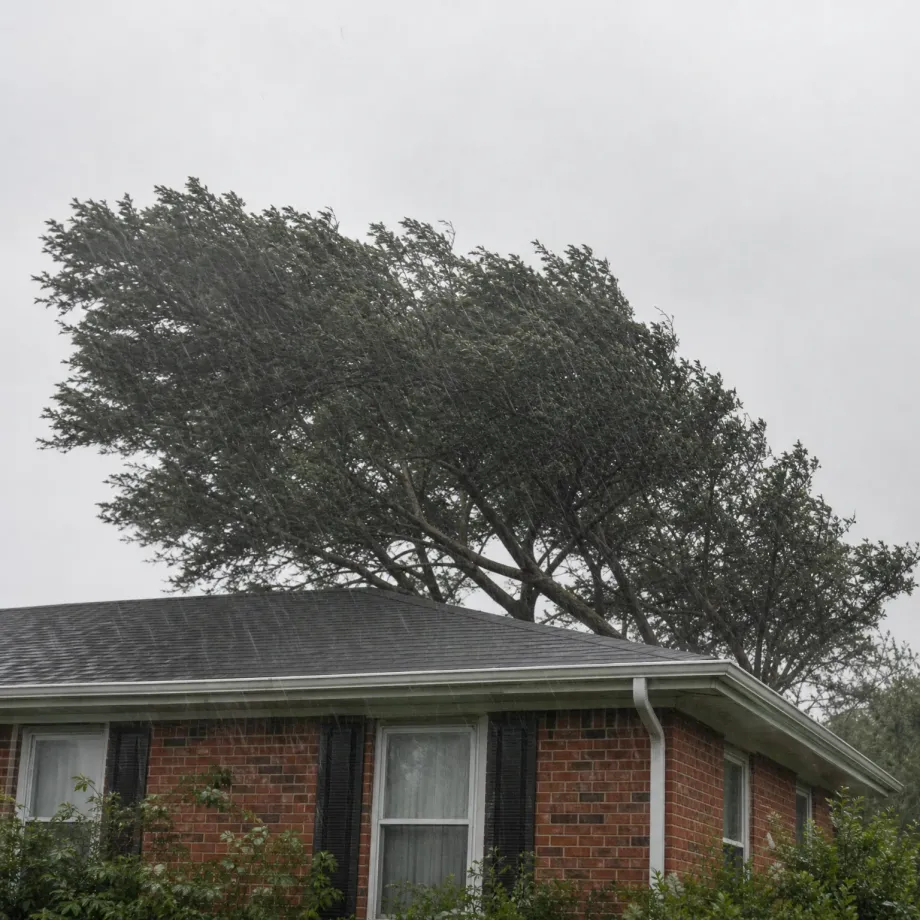
Sizing a heat pump for a home in Randolph County starts with what the climate actually demands of the equipment, and that demand is real. 232 severe weather events were recorded in Randolph County, North Carolina between 2015 and 2024. At that rate, severe weather is part of the normal operating environment a contractor quotes against, not an edge case they can set aside. A system sized for a calmer load will run harder and recover more slowly every time conditions push it. A contractor working here factors that in before settling on capacity, and that decision shapes every part of the install that follows.
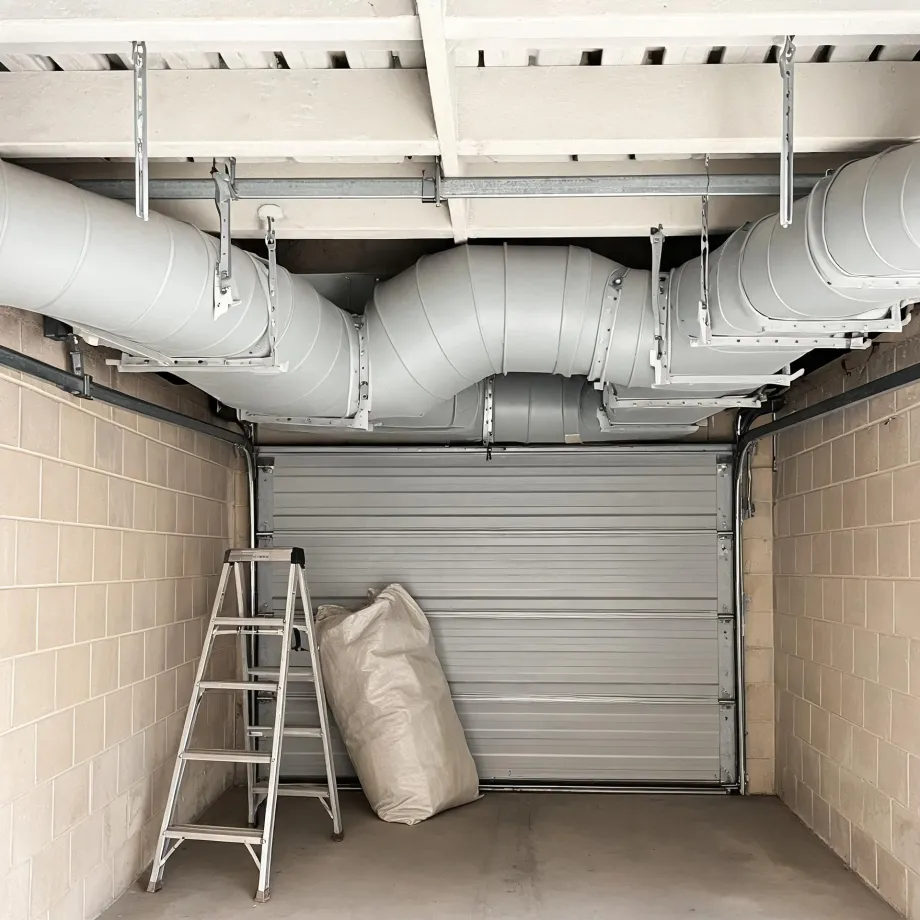
Ductwork laid in for a furnace-and-AC combination moves air differently than a heat pump needs, and in Randolph County much of the housing was built exactly for that earlier setup. Half the homes in Randolph County, North Carolina were built in 1985 or earlier (2020-2024 ACS 5-year). That gap between what the house was built with and what a heat pump demands is where an installation job gets complicated. A contractor has to assess the existing ducts before anything else gets priced, checking whether they can carry the volume and balance a heat pump requires without modification. The electrical service is the other variable, since older panels were not sized for the loads a modern unit draws. Both have to be confirmed on-site.
What Gets Installed With a New Heat Pump
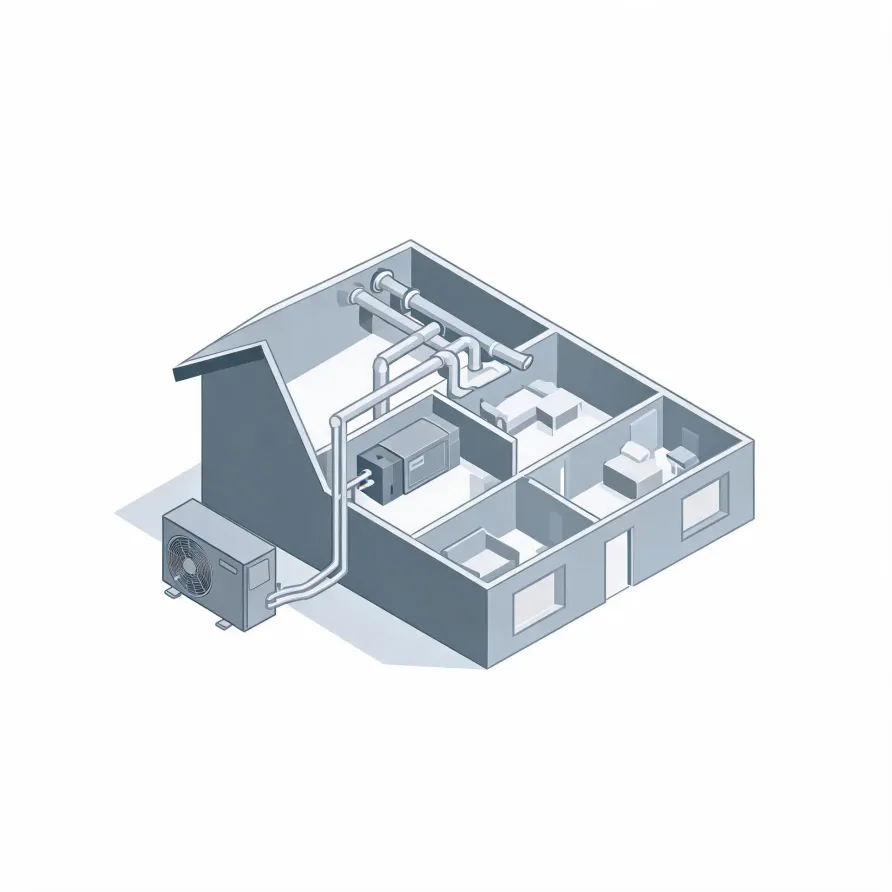
The outdoor unit is the piece most homeowners see first. It sits on a pad beside the house and holds the compressor and the condenser coil, which together do the heavy work of moving heat between the refrigerant and the outside air. Inside the house, the air handler mounts in a utility closet, attic, or basement and pushes conditioned air through the home.
A refrigerant line set runs between the two units, carrying refrigerant back and forth through insulated copper tubing. A thermostat goes on an interior wall and gives the homeowner control over when and how the system runs. Some installations also include a secondary electric resistance element inside the air handler for supplemental heat.
The drawing shows a typical layout, and a licensed contractor determines exactly what applies to your house.
Find a contractor in Randolph CountyRandolph County by the Numbers
232 severe weather events were recorded in Randolph County, North Carolina between 2015 and 2024.
NOAA National Centers for Environmental Information, Storm Events Database, bulk CSV export, events 2015-01-01 through 2024-12-31.Half the homes in Randolph County, North Carolina were built in 1985 or earlier (2020-2024 ACS 5-year).
U.S. Census Bureau, 2020-2024 American Community Survey 5-Year EstimatesRandolph County, North Carolina holds 62,901 housing units (2020-2024 ACS 5-year).
U.S. Census Bureau, 2020-2024 American Community Survey 5-Year EstimatesOwners occupy 72.5% of the occupied homes in Randolph County, North Carolina (2020-2024 ACS 5-year).
U.S. Census Bureau, 2020-2024 American Community Survey 5-Year EstimatesCodes & Standards Governing Heat Pump Installation in Randolph County, North Carolina2 sourced rules and standards
Licensing Rules for HVAC Work in Randolph County, North Carolina
North Carolina issues Class I heating licenses covering all systems in all structures, and Class II licenses covering heating systems in single-family detached residential dwellings.
North Carolina requires a license before any person or firm may engage in, or offer to engage in, the business of heating contracting.
Severe Weather Events in Randolph County
Weather swings put real load on heating and cooling equipment, and what a heat pump handles in Randolph County shapes how it should be sized and installed. The chart below tracks recorded severe weather events year by year, so you can see the conditions local contractors are building for.
232 severe weather events, 2015–2024. Source: NOAA National Centers for Environmental Information, Storm Events Database.