Tell us about the job
Takes about a minute. No obligation.
A contractor quoting a heat pump install in Moore County has to treat local weather as a design input, not a footnote. 167 severe weather events were recorded in Moore County, North Carolina between 2015 and 2024. At that rate, severe weather is part of the normal operating life of equipment here, which means sizing decisions and installation quality carry more weight than they do in quieter areas. A system undersized or loosely installed will run harder, cycle more, and reach its limits sooner. The contractor's job is to build that exposure into the spec before anything is ordered.
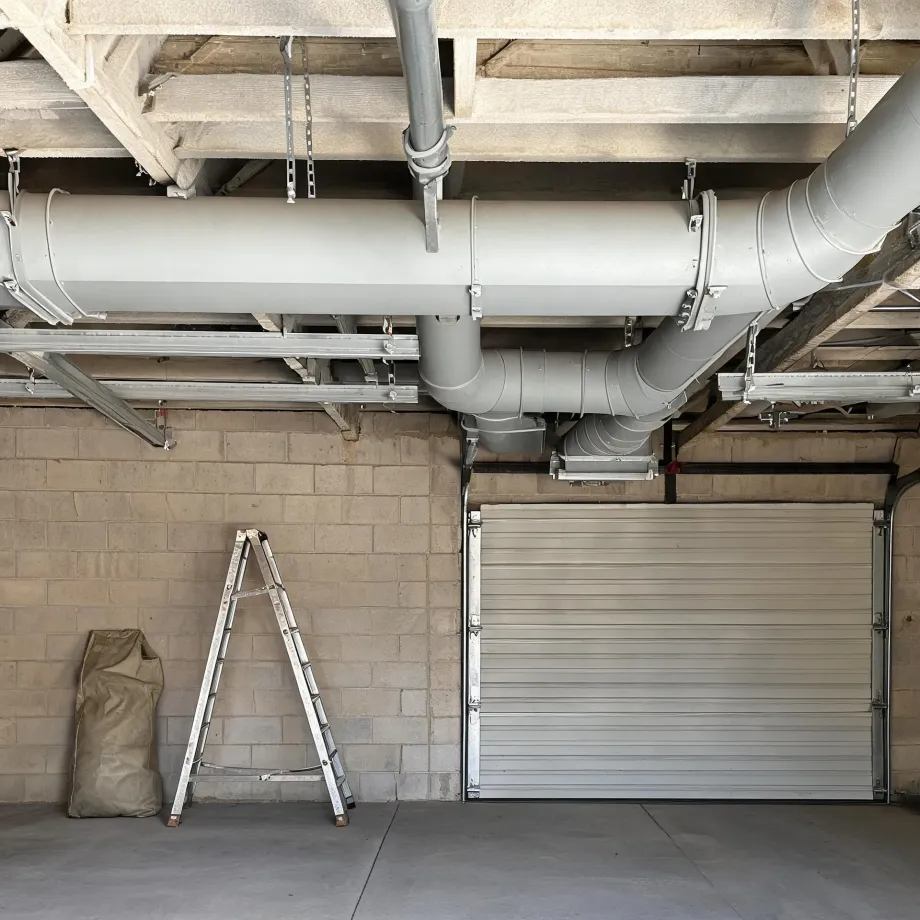
Existing ductwork and electrical service shape a heat pump installation more than the unit itself, and in Moore County both of those things were sized for something other than a heat pump. Half the homes in Moore County, North Carolina were built in 1994 or earlier (2020-2024 ACS 5-year). Houses from that period were typically built around equipment with different airflow requirements, and duct systems laid out for that equipment often need modification before they will carry a heat pump's output correctly. The electrical service is a separate question a contractor measures before anything gets ordered.
What Gets Installed With a New Heat Pump
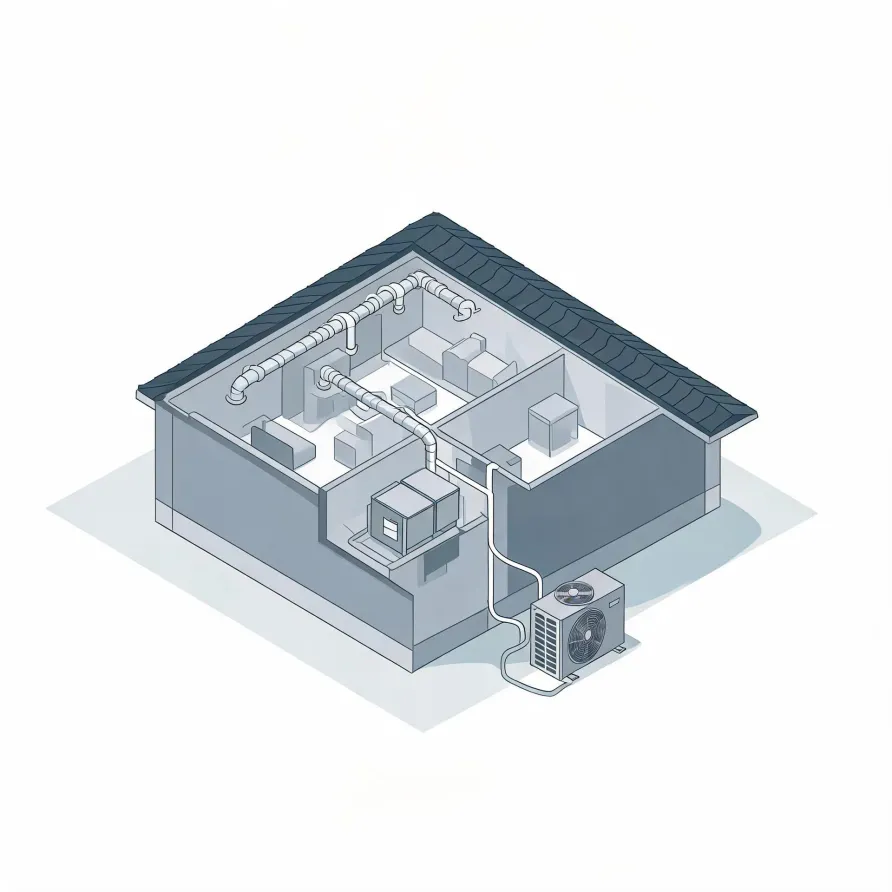
The outdoor unit is the piece a homeowner sees first, a metal cabinet set on a pad outside the house that holds the compressor and one set of coils. Inside, an air handler is mounted in a utility space, closet, or attic and contains a second coil along with a blower that moves conditioned air through the home. A refrigerant line set runs between the two units, connecting them through a small penetration in the wall.
A thermostat goes on an interior wall where it reads the temperature of the living space and signals both units to run or stop. Some installations also include a reversing valve assembly and an expansion device housed within the outdoor cabinet, both of which are part of what a contractor fits and commissions during the job.
The drawing shows a typical layout, and a licensed contractor determines exactly what applies to your house and how each piece is positioned within it.
Find a contractor in Moore CountyMoore County, by the numbers
167 severe weather events were recorded in Moore County, North Carolina between 2015 and 2024.
NOAA National Centers for Environmental Information, Storm Events Database, bulk CSV export, events 2015-01-01 through 2024-12-31.Half the homes in Moore County, North Carolina were built in 1994 or earlier (2020-2024 ACS 5-year).
U.S. Census Bureau, 2020-2024 American Community Survey 5-Year EstimatesMoore County, North Carolina holds 50,280 housing units (2020-2024 ACS 5-year).
U.S. Census Bureau, 2020-2024 American Community Survey 5-Year EstimatesOwners occupy 76.4% of the occupied homes in Moore County, North Carolina (2020-2024 ACS 5-year).
U.S. Census Bureau, 2020-2024 American Community Survey 5-Year EstimatesCodes & Standards Governing Heat Pump Installation in Moore County, North Carolina2 sourced rules and standards
Licensing Rules for HVAC Work in Moore County, North Carolina
North Carolina issues Class I heating licenses covering all systems in all structures, and Class II licenses covering heating systems in single-family detached residential dwellings.
North Carolina requires a license before any person or firm may engage in, or offer to engage in, the business of heating contracting.
Severe Weather Events in Moore County, Year by Year
Heating and cooling equipment in Moore County works against local weather, not average weather. How hard that equipment runs, and how long it lasts, depends on what the climate here actually delivers.
167 severe weather events, 2015–2024. Source: NOAA National Centers for Environmental Information, Storm Events Database.