Tell us about the job
Takes about a minute. No obligation.
A contractor quoting a heat pump install in Scotland County starts from the house: its square footage, insulation, window placement, and duct condition. 70 severe weather events were recorded in Scotland County, North Carolina between 2015 and 2024. At that rate, severe weather is a real but occasional presence, not the dominant variable shaping every sizing decision. What drives the spec here is the building envelope and how the system will be loaded day to day. A sloppy install that leaves refrigerant lines undersized or ductwork leaking will cause more measurable harm than the weather record will.
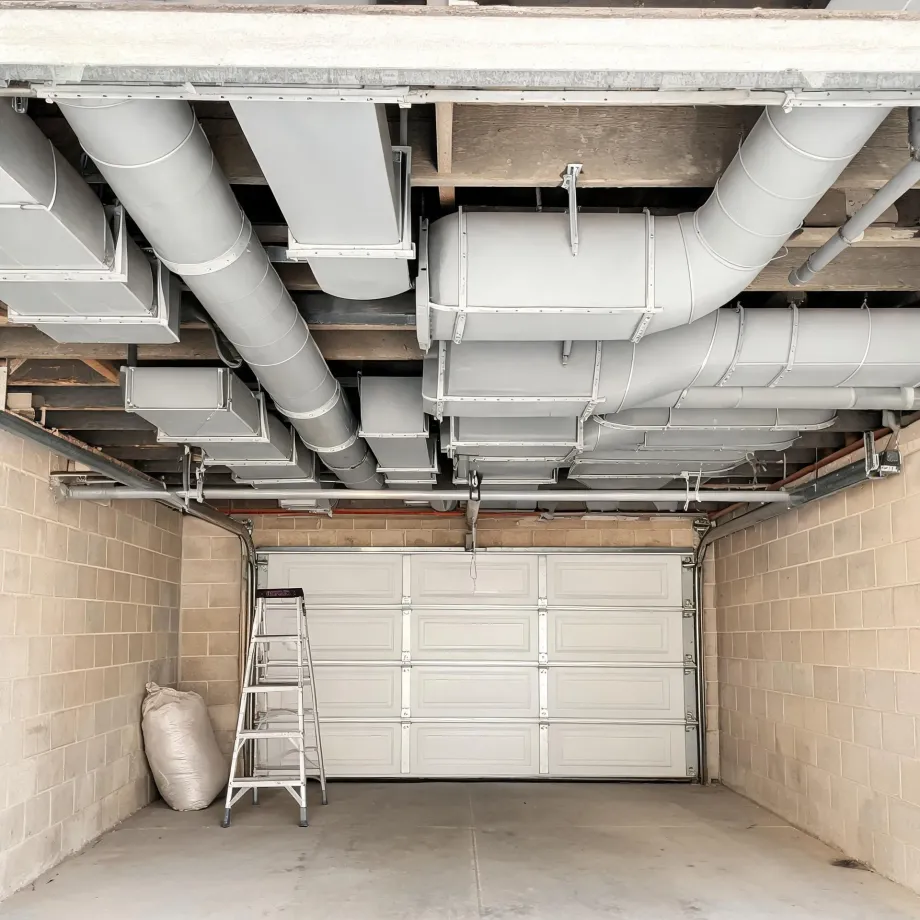
Ductwork laid down for an older system carries assumptions about airflow that a heat pump does not share, and those assumptions are built into every run, every return, and every takeoff in houses that age. Half the homes in Scotland County, North Carolina were built in 1982 or earlier (2020-2024 ACS 5-year). That means the duct layout a contractor finds in a substantial share of Scotland County homes was engineered around equipment nothing like what is going in today. Before a new unit can be priced with confidence, the existing duct system has to be opened and measured, because its capacity and condition decide whether the installation is straightforward or whether remediation is part of the job.
What Gets Installed With a New Heat Pump
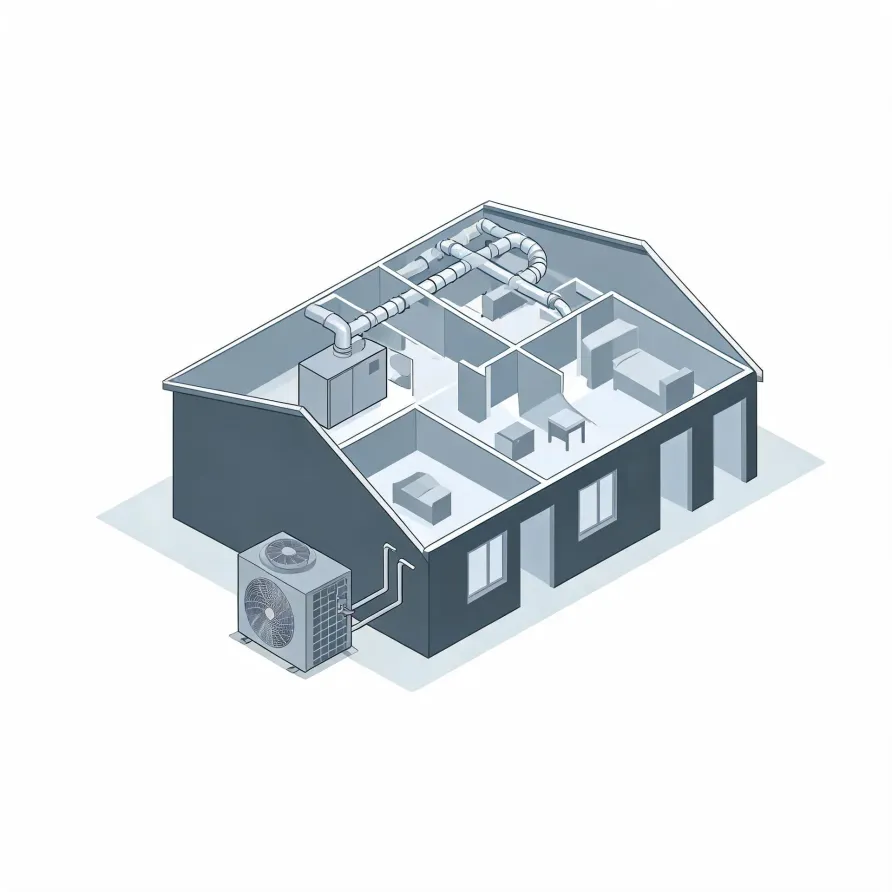
The outdoor unit is the piece most homeowners see first. It sits on a pad outside the house and holds the compressor and the condenser coil, which together move heat between the outside air and the refrigerant lines. Inside, the air handler mounts in a closet, attic, or utility room and contains the blower and the indoor coil that conditions the air before it enters the living space.
A refrigerant line set runs between the two units, typically along an exterior wall, carrying refrigerant back and forth. A thermostat mounts on an interior wall and gives the homeowner control over when and how the system runs. Some installations also include a disconnect box near the outdoor unit, which allows a contractor to cut power to that unit independently.
The drawing shows a typical layout, and a licensed contractor determines exactly how each piece fits into your specific home.
Find a contractor in Scotland CountyScotland County, NC, by the numbers
70 severe weather events were recorded in Scotland County, North Carolina between 2015 and 2024.
NOAA National Centers for Environmental Information, Storm Events Database, bulk CSV export, events 2015-01-01 through 2024-12-31.Half the homes in Scotland County, North Carolina were built in 1982 or earlier (2020-2024 ACS 5-year).
U.S. Census Bureau, 2020-2024 American Community Survey 5-Year EstimatesScotland County, North Carolina holds 14,441 housing units (2020-2024 ACS 5-year).
U.S. Census Bureau, 2020-2024 American Community Survey 5-Year EstimatesOwners occupy 61.8% of the occupied homes in Scotland County, North Carolina (2020-2024 ACS 5-year).
U.S. Census Bureau, 2020-2024 American Community Survey 5-Year EstimatesCodes & Standards Behind Heat Pump Installation in Scotland County, North Carolina2 sourced rules and standards
Licensing Rules for Scotland County, North Carolina
North Carolina issues Class I heating licenses covering all systems in all structures, and Class II licenses covering heating systems in single-family detached residential dwellings.
North Carolina requires a license before any person or firm may engage in, or offer to engage in, the business of heating contracting.
Severe Weather Events in Scotland County
Scotland County's weather puts real demands on heating and cooling equipment, and those demands shape what a heat pump here needs to handle year after year. How often conditions turn severe is a local fact, and it belongs in any honest conversation about installation and equipment selection in this area.
70 severe weather events, 2015–2024. Source: NOAA National Centers for Environmental Information, Storm Events Database.