Tell us about the job
Takes about a minute. No obligation.
Sizing a heat pump for Buncombe County starts with what the climate asks of it. 88 severe weather events were recorded in Buncombe County, North Carolina between 2015 and 2024. At that rate, severe weather is a standing feature of the operating environment, and a contractor who ignores it will size the system for conditions that do not exist here. Duct connections, refrigerant lines, and outdoor unit placement all get specified against what this area actually runs through. A unit sized for a gentler load will cycle harder and wear faster in a county where the weather is this consistent.
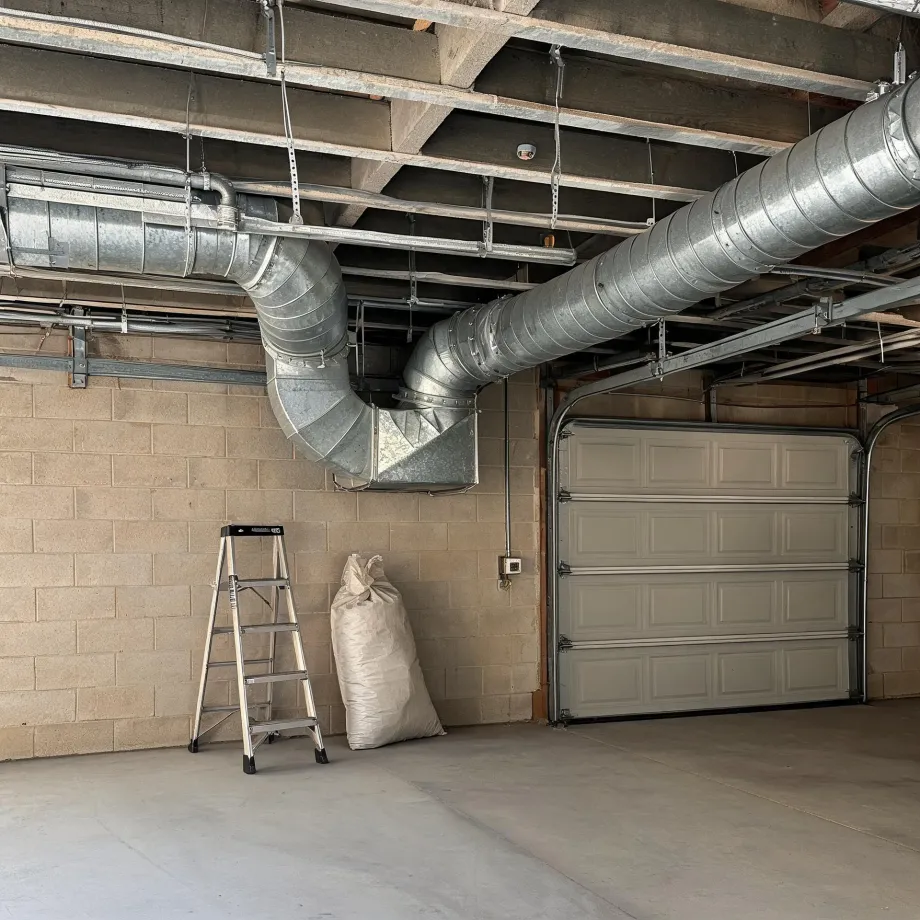
Existing ductwork is what a contractor prices carefully before anything else on a heat pump installation in Buncombe County. Half the homes in Buncombe County, North Carolina were built in 1991 or earlier (2020-2024 ACS 5-year). Ductwork laid down for a furnace-and-central-air setup was sized and routed for a different kind of load, and a heat pump moves air at lower temperatures across longer run times. What fits one system does not automatically fit the other. The electrical service is a separate check, since the panel has to support the draw of a modern heat pump. Both are variables the contractor has to measure, not assume.
What Gets Installed With a New Heat Pump
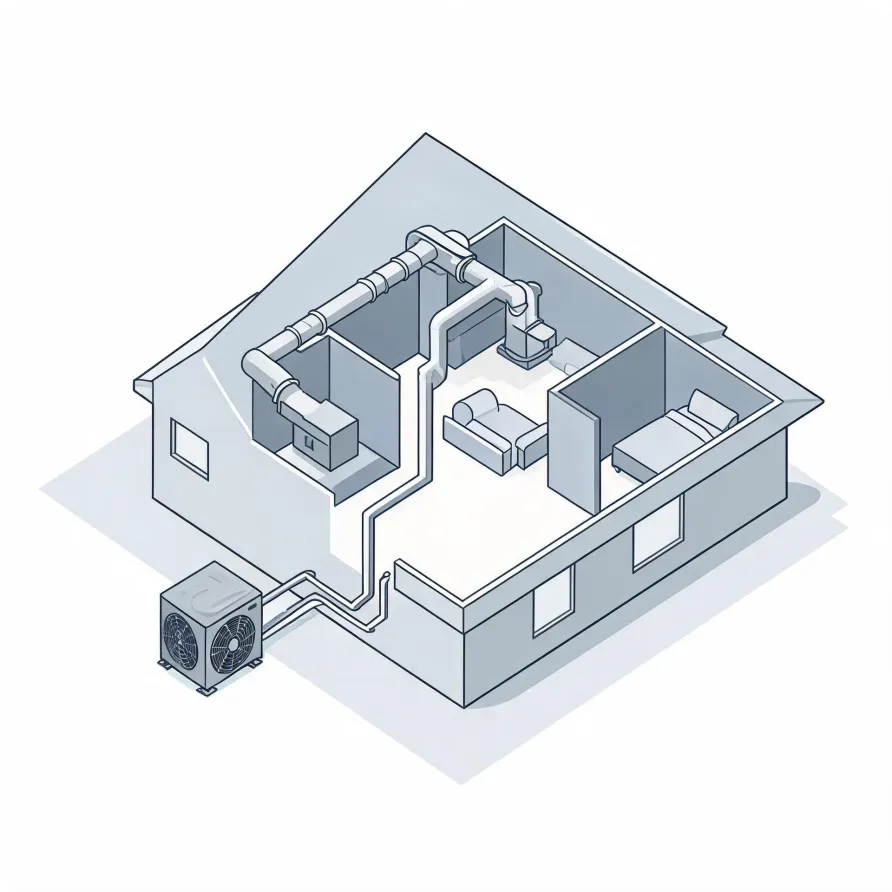
The outdoor unit is the piece a homeowner sees first, a metal cabinet that sits on a pad beside the house and holds the compressor and one set of coils. Inside, an air handler mounts in a closet, attic, or utility room and contains the second set of coils along with a blower that moves conditioned air through the home.
A refrigerant line set runs between the two units, carrying refrigerant back and forth through insulated copper tubing that a contractor routes along the exterior wall or through a chase. A thermostat goes on an interior wall and gives the homeowner control over the whole system.
The drawing shows a typical layout, and a licensed contractor determines exactly how each piece fits the configuration of your house.
Find a contractor in Buncombe CountyBuncombe County by the numbers
88 severe weather events were recorded in Buncombe County, North Carolina between 2015 and 2024.
NOAA National Centers for Environmental Information, Storm Events Database, bulk CSV export, events 2015-01-01 through 2024-12-31.Half the homes in Buncombe County, North Carolina were built in 1991 or earlier (2020-2024 ACS 5-year).
U.S. Census Bureau, 2020-2024 American Community Survey 5-Year EstimatesBuncombe County, North Carolina holds 134,483 housing units (2020-2024 ACS 5-year).
U.S. Census Bureau, 2020-2024 American Community Survey 5-Year EstimatesOwners occupy 66.2% of the occupied homes in Buncombe County, North Carolina (2020-2024 ACS 5-year).
U.S. Census Bureau, 2020-2024 American Community Survey 5-Year EstimatesRules and Standards Behind Heat Pump Installation in Buncombe County, North Carolina2 sourced rules and standards
Licensing Rules for Buncombe County, North Carolina
North Carolina issues Class I heating licenses covering all systems in all structures, and Class II licenses covering heating systems in single-family detached residential dwellings.
North Carolina requires a license before any person or firm may engage in, or offer to engage in, the business of heating contracting.
Severe Weather Events in Buncombe County
Weather puts a measurable load on heating and cooling equipment, and that load varies by location. What happens in Buncombe County shapes what a heat pump here has to handle, which makes local conditions a real factor in how a system is sized and installed.
88 severe weather events, 2015–2024. Source: NOAA National Centers for Environmental Information, Storm Events Database.