Tell us about the job
Takes about a minute. No obligation.
A contractor quoting a heat pump installation in Madison County is solving a local problem, not pulling a number from a spec sheet. Duct runs, sun exposure, floor plan, and how the house holds heat in summer all feed into what size unit actually fits. 51 severe weather events were recorded in Madison County, North Carolina between 2015 and 2024. At that rate, severe weather is a real but occasional factor in the operating life of equipment here, and a contractor who treats it as the main sizing variable is reaching. What drives the installation decision is the building itself.
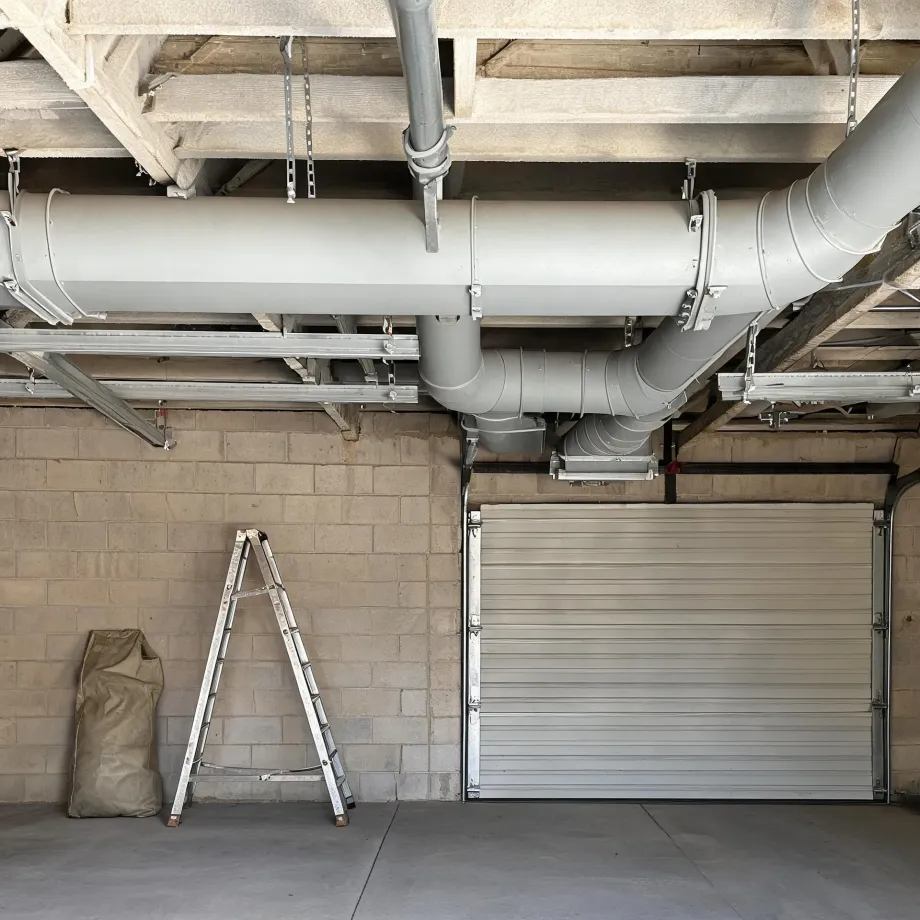
Ductwork installed for a gas furnace or a central air system runs at different pressures and, often, different branch configurations than a heat pump needs. Half the homes in Madison County, North Carolina were built in 1987 or earlier (2020-2024 ACS 5-year). A house that old was never designed around a heat pump, and the ducts laid out when it was built reflect that. What a contractor has to measure before the job is quoted is whether those existing runs can carry the volume and balance a heat pump requires, and in stock of this age, that answer is not obvious from the outside. Electrical service is a second checkpoint, since older panels often need evaluation before a new unit can be connected.
What Gets Installed With a New Heat Pump
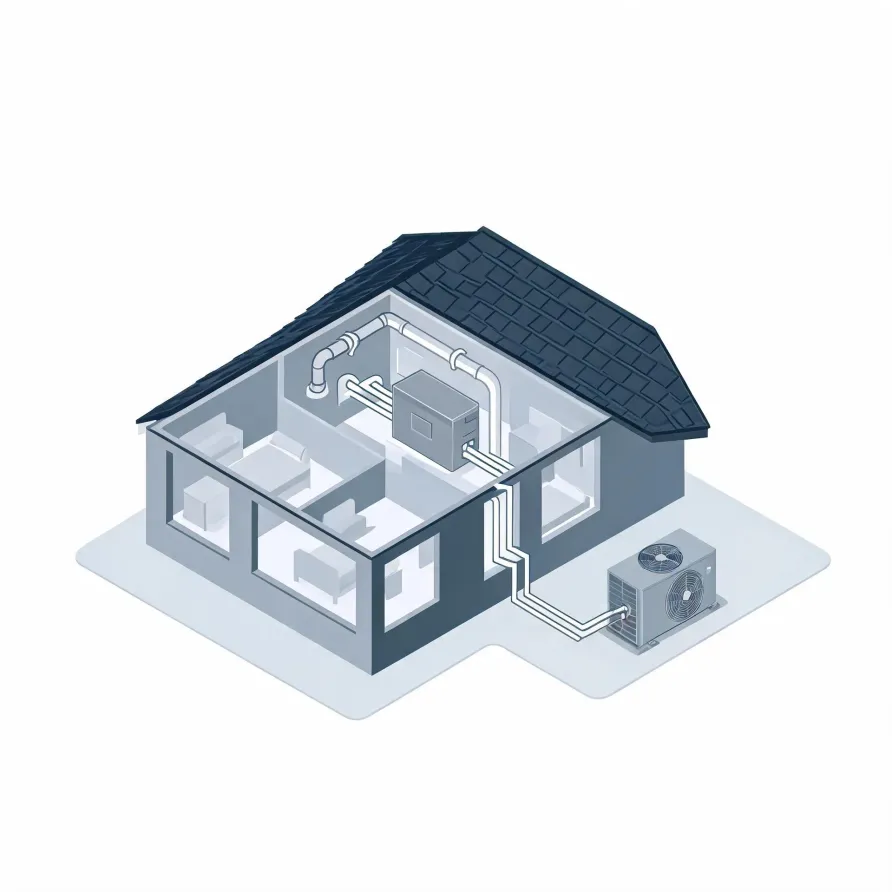
The outdoor unit is the piece most homeowners notice first. It sits on a pad outside the house and holds the compressor and the condenser coil, which together do the heavy work of moving heat. Inside, the air handler mounts in a closet, attic, or utility room and pushes conditioned air through the home.
A refrigerant line set runs between the two units, carrying the fluid that links them. The thermostat goes on an interior wall and gives the homeowner control over the whole system. A condensate drain line also runs from the air handler to carry away moisture pulled from the indoor air.
The drawing shows a typical layout, and a licensed contractor determines what applies to your specific house and its existing setup.
Find a contractor in Madison CountyMadison County, by the numbers
51 severe weather events were recorded in Madison County, North Carolina between 2015 and 2024.
NOAA National Centers for Environmental Information, Storm Events Database, bulk CSV export, events 2015-01-01 through 2024-12-31.Half the homes in Madison County, North Carolina were built in 1987 or earlier (2020-2024 ACS 5-year).
U.S. Census Bureau, 2020-2024 American Community Survey 5-Year EstimatesMadison County, North Carolina holds 11,356 housing units (2020-2024 ACS 5-year).
U.S. Census Bureau, 2020-2024 American Community Survey 5-Year EstimatesOwners occupy 77.5% of the occupied homes in Madison County, North Carolina (2020-2024 ACS 5-year).
U.S. Census Bureau, 2020-2024 American Community Survey 5-Year EstimatesRules and Standards Governing Heat Pump Installation in Madison County, North Carolina2 sourced rules and standards
What Madison County and North Carolina Require for HVAC Installation
North Carolina issues Class I heating licenses covering all systems in all structures, and Class II licenses covering heating systems in single-family detached residential dwellings.
North Carolina requires a license before any person or firm may engage in, or offer to engage in, the business of heating contracting.
Severe Weather Events in Madison County by Year
Local weather conditions determine how hard heating and cooling equipment has to work and how often. A heat pump sized and installed for what Madison County actually delivers will hold up better than one spec'd for somewhere else.
51 severe weather events, 2015–2024. Source: NOAA National Centers for Environmental Information, Storm Events Database.