Tell us about the job
Takes about a minute. No obligation.
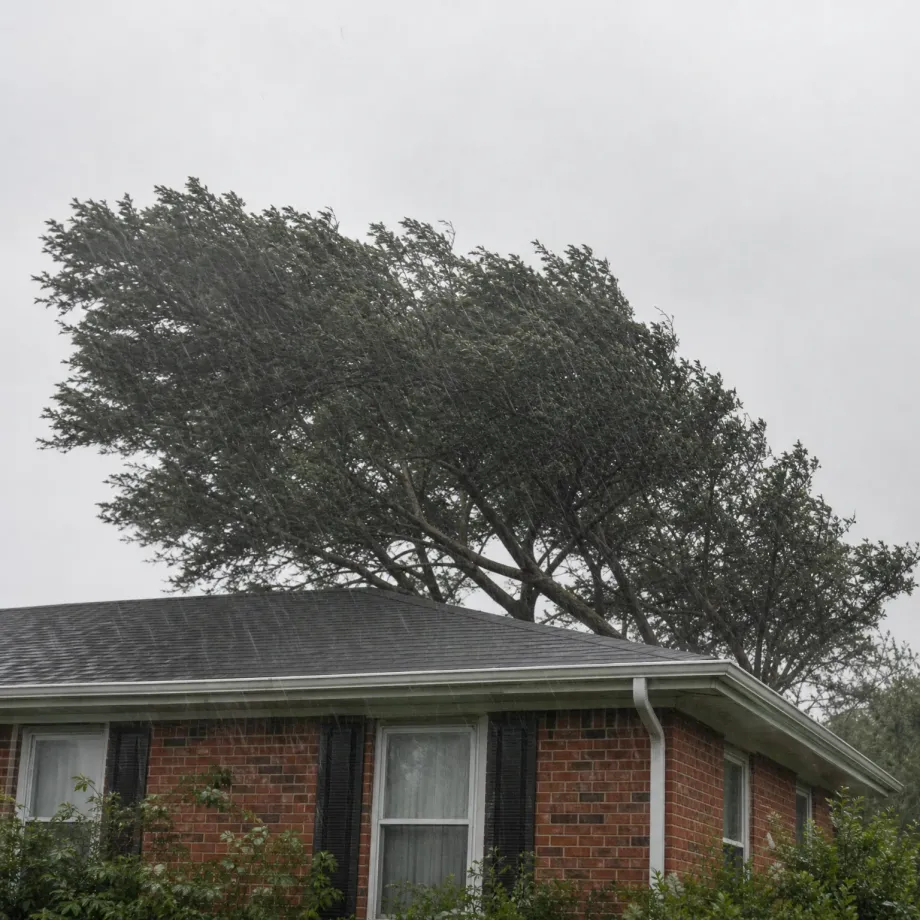
A contractor quoting a heat pump install in Franklin County has to settle the sizing question before anything else, and the weather record here is a real input to that calculation. 115 severe weather events were recorded in Franklin County, North Carolina between 2015 and 2024. At that rate, severe weather is a standing condition in this area, and a unit sized to catalog averages rather than local demand will run hard against its limits from the start. A contractor who has worked this county knows which way to shade the sizing, and that call determines how the system performs for years.
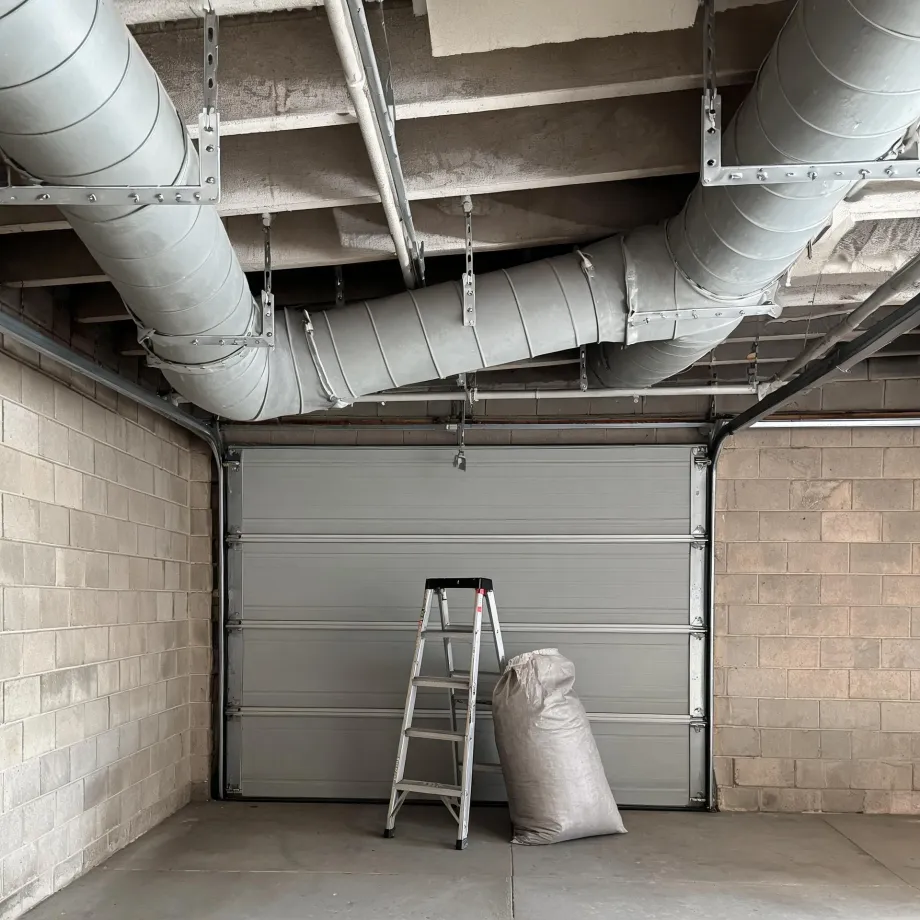
Ductwork laid out for an older system carries assumptions about static pressure and airflow that a heat pump will test. Half the homes in Franklin County, North Carolina were built in 1997 or earlier (2020-2024 ACS 5-year). That spread across the housing stock means a contractor sizing a new heat pump here has to look at what the existing ducts can actually move before the equipment selection matters. Electrical service follows the same logic: a panel from that era may run the loads it was built for and fall short on a heat pump's startup draw. The duct layout and the electrical capacity are where the installation either works or has to be renegotiated.
What Gets Installed With a New Heat Pump
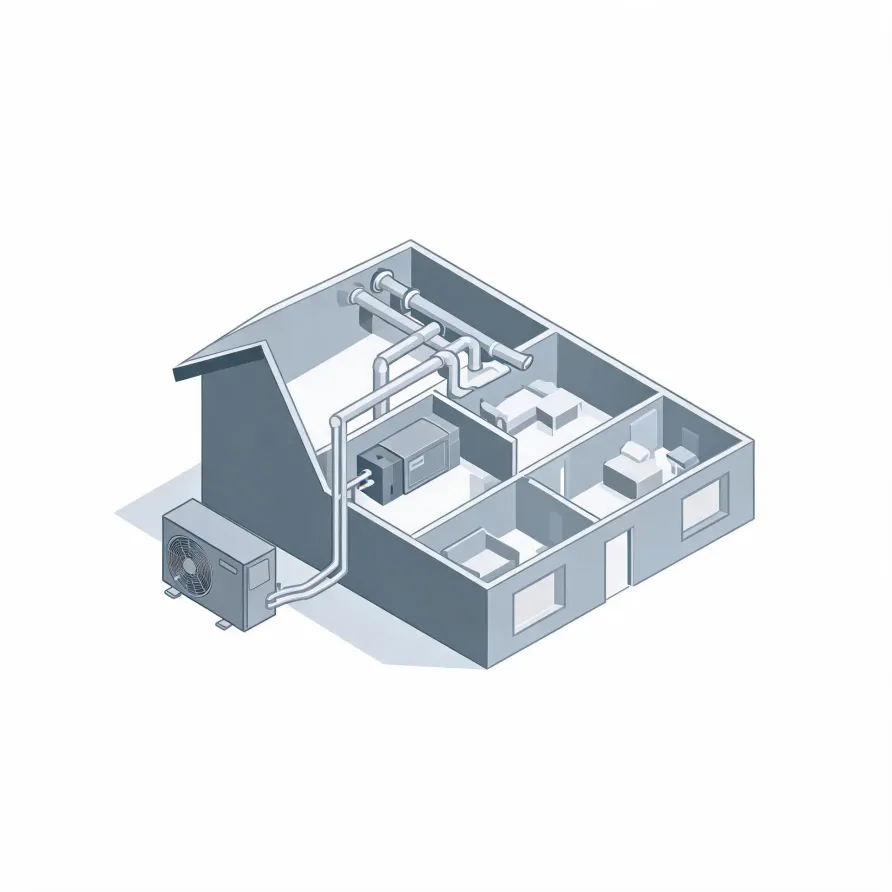
The outdoor unit is the piece a homeowner sees first, sitting on a pad beside the house. It holds the compressor and the outdoor coil, and it is where heat moves between the refrigerant and the outside air. Inside, the air handler mounts in a closet, attic, or utility space and pushes conditioned air through the home.
A refrigerant line set runs between the two units, carrying refrigerant back and forth through insulated copper tubing. The thermostat goes on an interior wall and gives the homeowner control over the whole system. Some installations also include a condensate drain line routed away from the air handler to handle moisture the indoor coil pulls from the air.
The drawing shows a typical layout, and a licensed contractor determines exactly how each piece fits the conditions of your house.
Find a contractor in Franklin CountyFranklin County, by the numbers
115 severe weather events were recorded in Franklin County, North Carolina between 2015 and 2024.
NOAA National Centers for Environmental Information, Storm Events Database, bulk CSV export, events 2015-01-01 through 2024-12-31.Half the homes in Franklin County, North Carolina were built in 1997 or earlier (2020-2024 ACS 5-year).
U.S. Census Bureau, 2020-2024 American Community Survey 5-Year EstimatesFranklin County, North Carolina holds 31,767 housing units (2020-2024 ACS 5-year).
U.S. Census Bureau, 2020-2024 American Community Survey 5-Year EstimatesOwners occupy 78.6% of the occupied homes in Franklin County, North Carolina (2020-2024 ACS 5-year).
U.S. Census Bureau, 2020-2024 American Community Survey 5-Year EstimatesRules & Standards Governing Heat Pump Installation in Franklin County, North Carolina2 sourced rules and standards
Licensing and Legal Requirements in Franklin County, North Carolina
North Carolina issues Class I heating licenses covering all systems in all structures, and Class II licenses covering heating systems in single-family detached residential dwellings.
North Carolina requires a license before any person or firm may engage in, or offer to engage in, the business of heating contracting.
Severe Weather Events in Franklin County
Heat pumps in Franklin County work against whatever the climate delivers, and local weather history shapes how hard that work gets. Equipment sizing and installation decisions are grounded in real conditions here, not regional averages.
115 severe weather events, 2015–2024. Source: NOAA National Centers for Environmental Information, Storm Events Database.