Tell us about the job
Takes about a minute. No obligation.
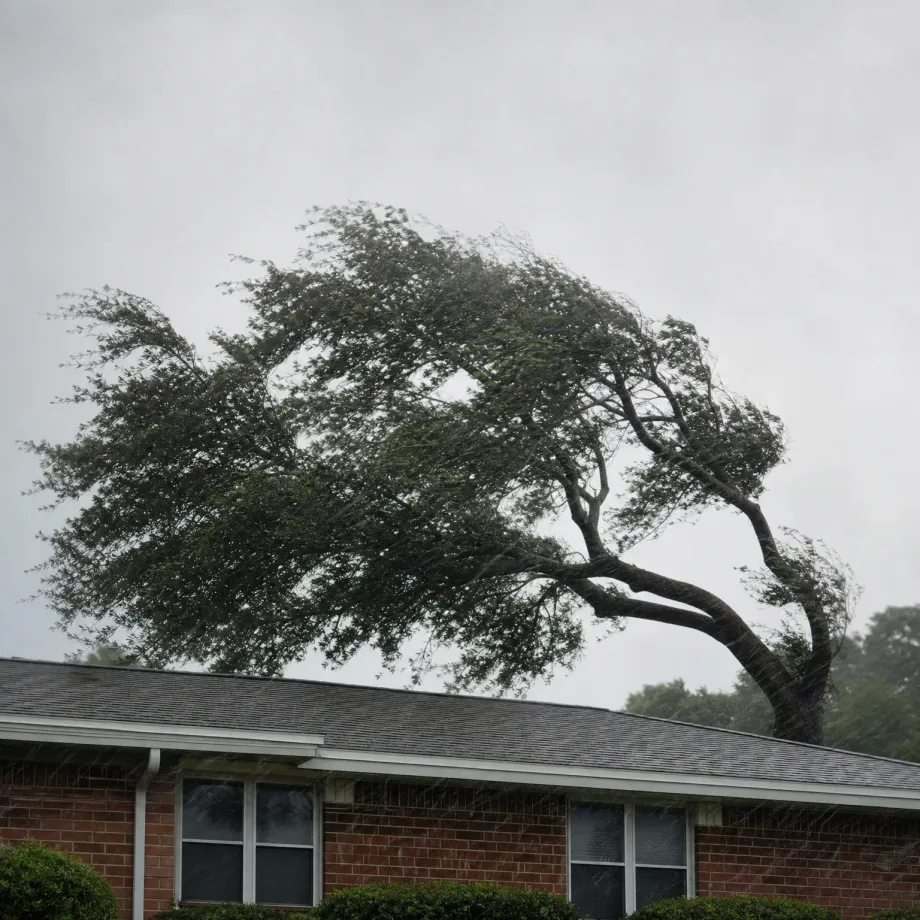
A contractor quoting a heat pump installation in Cherokee County is making local decisions about sizing, refrigerant line runs, and mounting placement that the county's actual weather record should inform. 68 severe weather events were recorded in Cherokee County, North Carolina between 2015 and 2024. At roughly that rate, severe weather is a real but infrequent factor in the life of a system here. It shapes how a unit is specified, but it does not dominate the job the way it would in a county where rough weather is a near-constant condition. What drives installation choices here are the fundamentals: load calculations, airflow, and a mount that holds up under the weather this area does see.
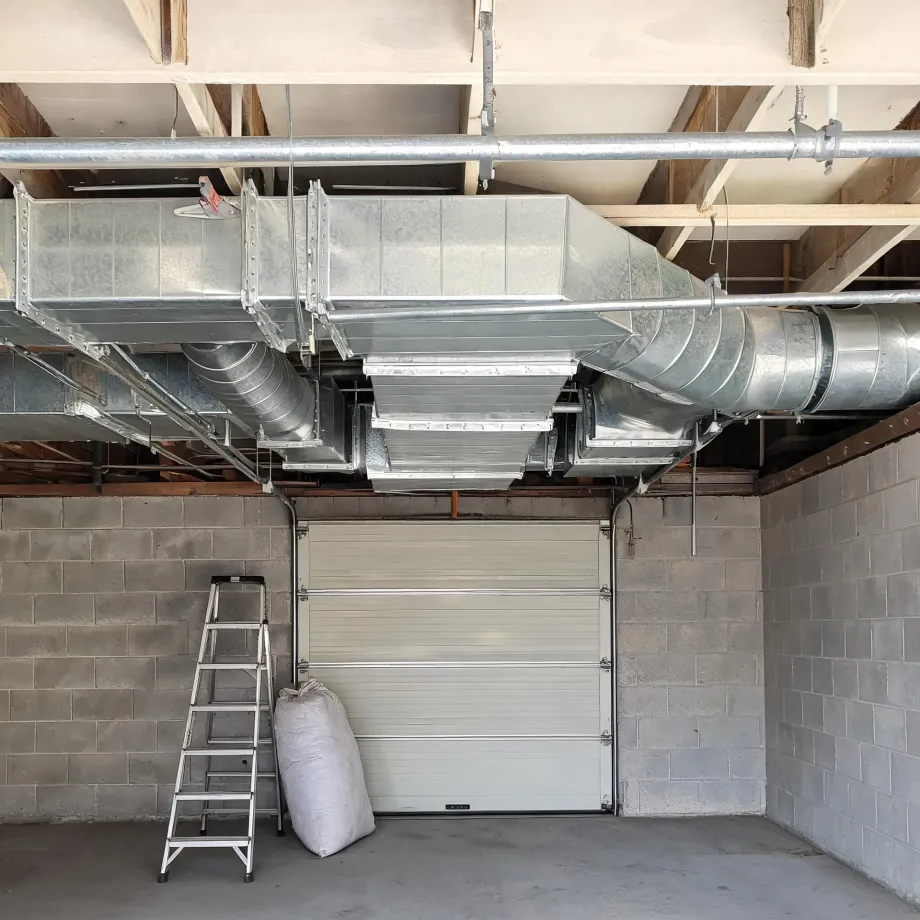
Ductwork sized and routed for equipment from a different era is what a contractor has to evaluate before anything else on a heat pump installation in Cherokee County. Half the homes in Cherokee County, North Carolina were built in 1994 or earlier (2020-2024 ACS 5-year). A house built around that time was designed for systems with different airflow and load characteristics than a modern heat pump draws, which means the existing duct layout either carries the new system or it does not. The electrical service is the second question. A contractor who opens both before pricing has the information the quote needs; one who skips them is guessing at two of the variables that most change what the job costs.
What Gets Installed With a New Heat Pump
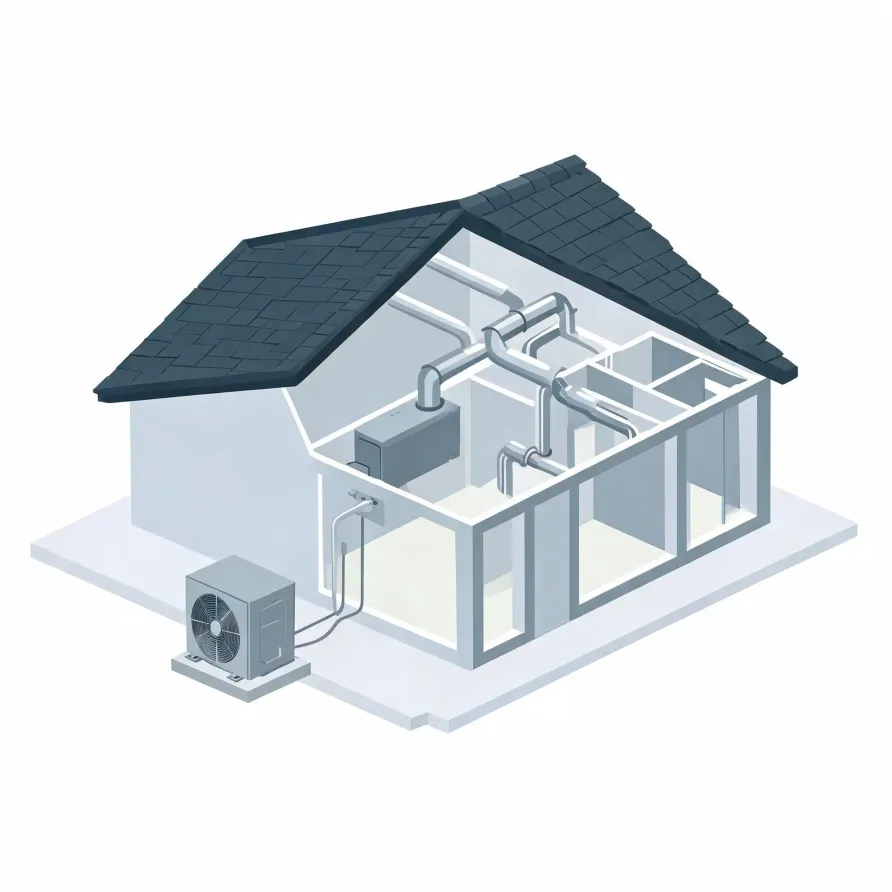
The outdoor unit sits on a pad beside the house and holds the compressor and the condenser coil. These are the mechanical heart of the system. Inside, the air handler mounts in a closet, attic, or utility space and contains the evaporator coil and the blower that moves conditioned air through the house.
A refrigerant line set runs between the two units, carrying refrigerant through insulated copper tubing that passes through the wall. A thermostat goes on an interior wall where it reads the living space temperature and tells the system when to run.
The drawing shows a typical layout, and a licensed contractor determines exactly how each piece fits into your home.
Find a contractor in Cherokee CountyCherokee County, by the numbers
68 severe weather events were recorded in Cherokee County, North Carolina between 2015 and 2024.
NOAA National Centers for Environmental Information, Storm Events Database, bulk CSV export, events 2015-01-01 through 2024-12-31.Half the homes in Cherokee County, North Carolina were built in 1994 or earlier (2020-2024 ACS 5-year).
U.S. Census Bureau, 2020-2024 American Community Survey 5-Year EstimatesCherokee County, North Carolina holds 18,404 housing units (2020-2024 ACS 5-year).
U.S. Census Bureau, 2020-2024 American Community Survey 5-Year EstimatesOwners occupy 83.7% of the occupied homes in Cherokee County, North Carolina (2020-2024 ACS 5-year).
U.S. Census Bureau, 2020-2024 American Community Survey 5-Year EstimatesHeat Pump Installation Rules for Cherokee County, North Carolina2 sourced standards and codes
Licensing Rules for HVAC Work in Cherokee County, North Carolina
North Carolina issues Class I heating licenses covering all systems in all structures, and Class II licenses covering heating systems in single-family detached residential dwellings.
North Carolina requires a license before any person or firm may engage in, or offer to engage in, the business of heating contracting.
Severe Weather Events in Cherokee County
Cherokee County's climate puts real demands on heating and cooling equipment, and those demands shape what a heat pump here needs to handle over its working life. A system sized and installed for local conditions performs differently than one that is not, which is why weather history is a starting point for any installation decision in this area.
68 severe weather events, 2015–2024. Source: NOAA National Centers for Environmental Information, Storm Events Database.