Tell us about the job
Takes about a minute. No obligation.
A heat pump repair in Cherokee County starts with what the system has been through, and the answer is usually time and maintenance gaps rather than storm load. 68 severe weather events were recorded in Cherokee County, North Carolina between 2015 and 2024. At roughly that pace, severe weather is something equipment here encounters now and then, not a sustained battering that grinds down components year after year. A contractor diagnosing a failed compressor or a refrigerant problem in this county will check installation quality and service history before assuming the weather explains it. Those factors are what produce the pattern of failures here.
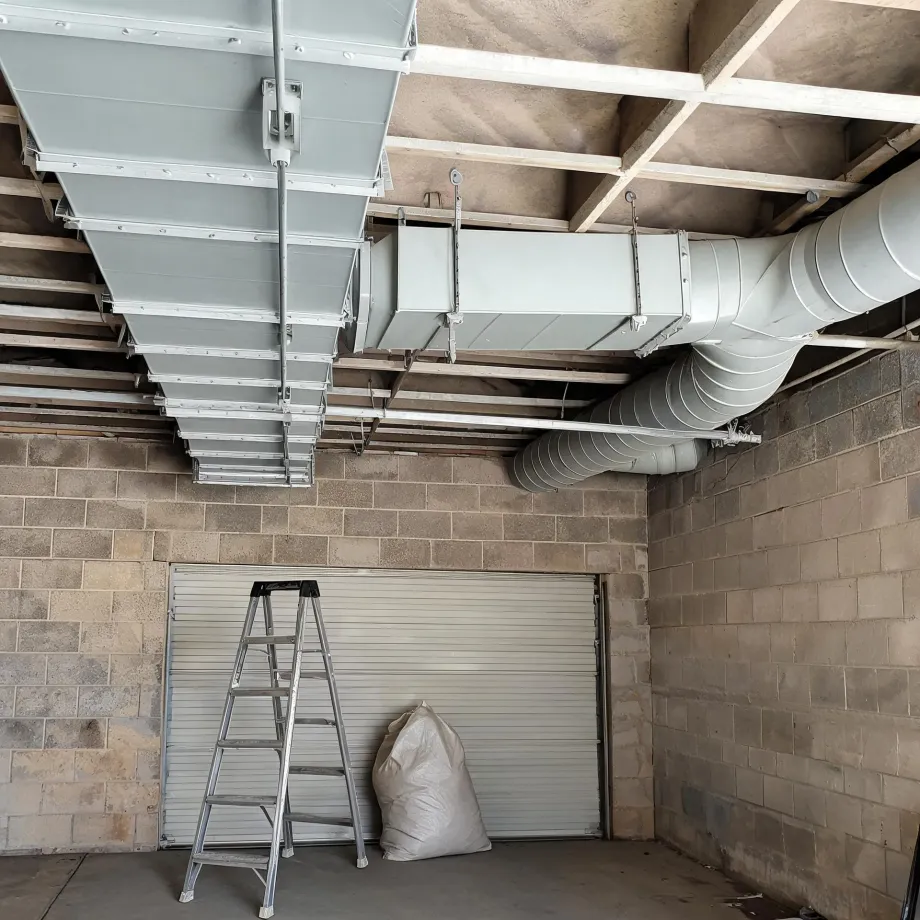
Ductwork sealed and run for one generation of equipment does not always suit what replaced it, and in Cherokee County that gap between the house and what heats and cools it is where a repair job gets complicated. Half the homes in Cherokee County, North Carolina were built in 1994 or earlier (2020-2024 ACS 5-year). A heat pump that has been adapted into an older system can show symptoms at the unit that actually trace back to restricted airflow or degraded connections elsewhere in the run. When a contractor opens the equipment and the refrigerant pressures or coil condition point somewhere upstream, that is the repair scope expanding past what the call-out described.
The Parts of a Heat Pump a Contractor Checks During Repair
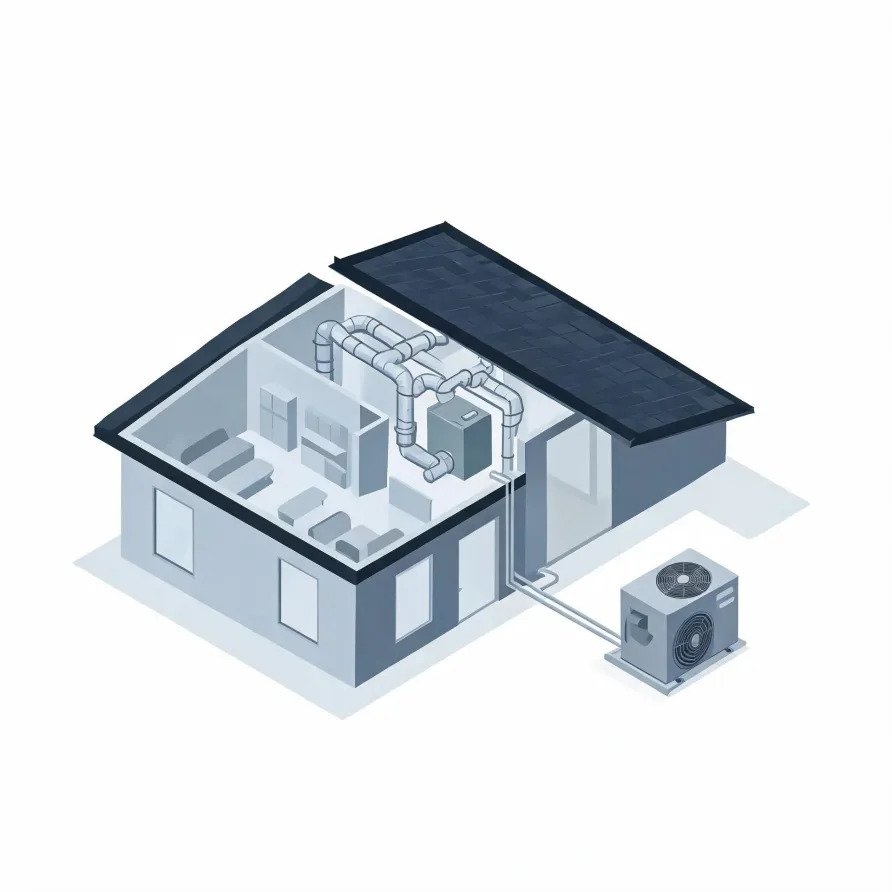
The outdoor unit sits on a pad beside the house and holds the compressor, which pressurizes the refrigerant, and the condenser coil wrapped around it. When a heat pump stops heating or cooling, the compressor and that coil are where a contractor looks first. The fan that pulls air across the coil is another common fault point in the same cabinet.
Inside, the air handler mounts in a closet, attic, or utility room and contains the indoor coil and the blower that pushes conditioned air through the house. The reversing valve, which sits inside the outdoor unit, is what lets the system run in both directions, and a failed valve is a repair in its own right. The refrigerant lines running between the two units and the thermostat on the wall round out what a contractor traces when the system is not behaving.
The drawing shows a typical heat pump layout, and a licensed contractor determines which components and connections apply to your specific setup.
Find a contractor in Cherokee CountyCherokee County, NC, by the numbers
68 severe weather events were recorded in Cherokee County, North Carolina between 2015 and 2024.
NOAA National Centers for Environmental Information, Storm Events Database, bulk CSV export, events 2015-01-01 through 2024-12-31.Half the homes in Cherokee County, North Carolina were built in 1994 or earlier (2020-2024 ACS 5-year).
U.S. Census Bureau, 2020-2024 American Community Survey 5-Year EstimatesCherokee County, North Carolina holds 18,404 housing units (2020-2024 ACS 5-year).
U.S. Census Bureau, 2020-2024 American Community Survey 5-Year EstimatesOwners occupy 83.7% of the occupied homes in Cherokee County, North Carolina (2020-2024 ACS 5-year).
U.S. Census Bureau, 2020-2024 American Community Survey 5-Year EstimatesCodes & Standards Covering Heat Pump Repair in Cherokee County, North Carolina2 sourced rules and standards
Licensing and Legal Requirements in Cherokee County, North Carolina
North Carolina issues Class I heating licenses covering all systems in all structures, and Class II licenses covering heating systems in single-family detached residential dwellings.
North Carolina requires a license before any person or firm may engage in, or offer to engage in, the business of heating contracting.
Severe Weather Events in Cherokee County
Heat pumps in Cherokee County work against whatever the local climate delivers, and stress from extreme weather shortens the life of components and surfaces faults that mild conditions would leave hidden. Repair needs here are shaped by local conditions, which is why the weather record matters.
68 severe weather events, 2015–2024. Source: NOAA National Centers for Environmental Information, Storm Events Database.